
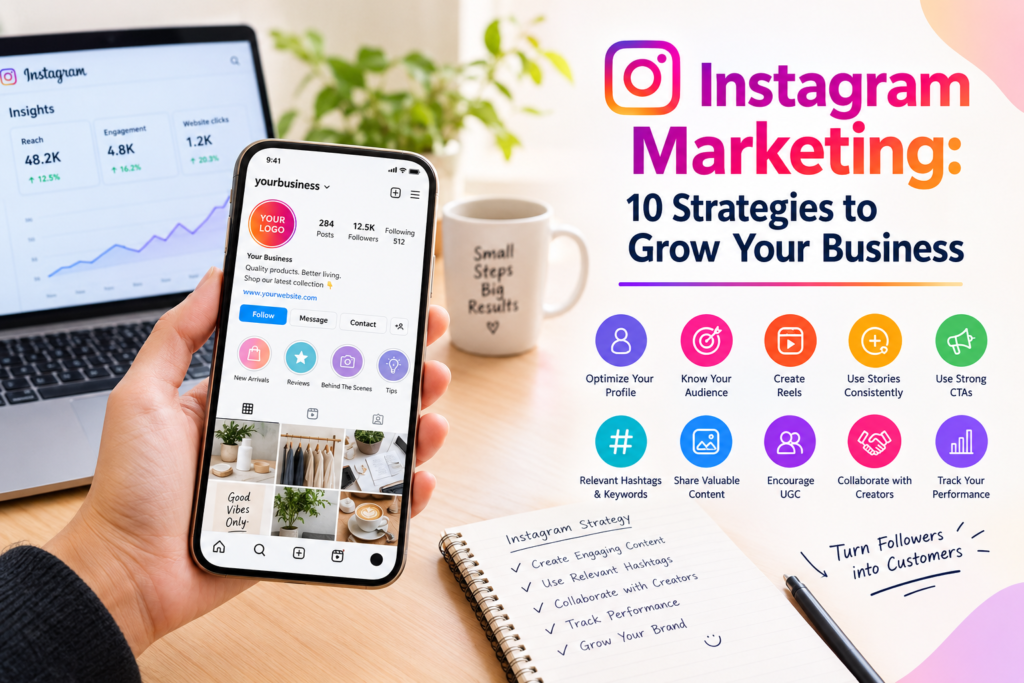
Instagram has become much more than a platform for sharing photos and videos. Today, businesses use Instagram to build brand awareness, connect with customers, showcase products, generate leads, and drive sales.
For small businesses and startups, Instagram can be especially valuable because it provides an opportunity to build an audience without requiring a massive marketing budget.
However, simply posting content isn’t enough. To grow your business on Instagram, you need a clear strategy and consistent execution.
Here are 10 effective Instagram marketing strategies to help grow your business.
1. Optimize Your Instagram Business Profile
Your Instagram profile is often the first thing potential customers see. Make sure it clearly communicates who you are and what your business offers.
Your profile should include:
- A recognizable profile picture or logo
- A clear and searchable username
- A short bio explaining your business
- A relevant call-to-action (CTA)
- A link to your website, store, or important landing page
- Contact information when appropriate
Your bio should answer a simple question:
“Why should someone follow or contact this business?”
A well-optimized profile can turn profile visitors into followers and potential customers.
2. Know Your Target Audience
Successful Instagram marketing starts with understanding your audience.
Instead of creating content for everyone, identify the people most likely to be interested in your products or services.
Think about:
- Age group
- Location
- Interests
- Problems
- Buying behavior
- Content preferences
For example, a fitness business may create content around workouts, healthy habits, beginner tips, and fitness education if those topics match its audience.
The more you understand your audience, the easier it becomes to create relevant content.
3. Create High-Quality Reels
Short-form video is one of the most important content formats on Instagram.
Reels can help businesses reach people who don’t already follow them. They can be used for educational content, product demonstrations, tutorials, entertainment, behind-the-scenes content, and customer-focused stories.
To make your Reels more engaging:
- Start with a strong hook
- Keep the message focused
- Use clear visuals
- Add captions where useful
- Maintain good audio quality
- End with a relevant CTA
Instead of starting with a long introduction, get to the main point quickly.
For example:
“3 mistakes you’re making when choosing skincare products…”
This immediately gives viewers a reason to continue watching.
4. Use Instagram Stories Consistently
Stories are useful for staying connected with your existing audience.
You can use Stories to share:
- New products
- Offers
- Polls
- Questions
- Customer reviews
- Behind-the-scenes moments
- Tutorials
- Announcements
Interactive features such as polls, quizzes, and question stickers can encourage followers to participate.
Stories can make your brand feel more human and approachable.
5. Use Strong Calls-to-Action
Every piece of content doesn’t need to directly sell something, but your audience should know what action to take when appropriate.
Examples of CTAs include:
- Shop Now
- Send Us a DM
- Visit Our Website
- Save This Post
- Share With a Friend
- Comment Your Opinion
- Book a Consultation
A clear CTA removes confusion and makes it easier for interested users to take the next step.
6. Use Relevant Hashtags and Keywords
Hashtags can help categorize content, while relevant keywords can help Instagram understand what your content is about.
Instead of using a huge collection of unrelated hashtags, focus on terms that are genuinely relevant to your business, product, location, and content.
For example, a Delhi-based fashion business could use relevant terms related to its product category and location rather than relying only on extremely broad hashtags.
Also, naturally include important keywords in your captions, profile information, and on-screen content where appropriate.
7. Post Valuable Content, Not Just Promotional Content
One of the biggest Instagram marketing mistakes businesses make is constantly trying to sell.
People are more likely to engage with a brand when its content provides value.
Try creating a content mix that includes:
Educational: Tips, guides, and how-to content.
Entertaining: Relatable videos, trends, and creative posts.
Inspirational: Stories, transformations, or motivational content.
Promotional: Products, services, offers, and launches.
A balanced content strategy helps you build trust instead of making your account feel like a constant advertisement.
8. Encourage User-Generated Content
User-generated content (UGC) is content created by customers or followers featuring a brand or its products.
Examples include:
- Customer photos
- Reviews
- Testimonials
- Unboxing videos
- Product demonstrations
With permission, businesses can share this content on their own Instagram account.
UGC can provide social proof and show potential customers how real people interact with your brand.
9. Collaborate With Creators and Other Businesses
Instagram collaborations can help businesses reach new audiences.
You can work with relevant creators, complementary businesses, or industry professionals.
For example, a clothing brand could collaborate with a fashion creator, while a local café could collaborate with a food creator.
Focus on relevance and audience fit, not just follower count.
A creator with a smaller but highly relevant audience may be more useful than someone with a much larger audience that doesn’t match your target customers.
10. Track Your Instagram Performance
The final strategy is often overlooked: measure your results.
Instagram Insights and other analytics tools can help you understand how your content is performing.
Pay attention to metrics such as:
- Reach
- Engagement
- Profile visits
- Website clicks
- Shares
- Saves
- Follows
- Leads or sales
Don’t judge your entire strategy based on likes alone.
For example, an educational post might receive fewer likes but generate many saves and shares. Those actions can indicate that people found the content useful.
Use your data to understand what works and improve your future content.
Conclusion
Instagram marketing can be a powerful tool for businesses of all sizes. But success doesn’t come from simply posting every day.
A strong Instagram strategy combines a well-optimized profile, audience research, engaging Reels, consistent Stories, valuable content, effective CTAs, relevant keywords, UGC, collaborations, and performance tracking.
Start with a few strategies instead of trying everything at once. Test different content formats, study your audience’s response, and improve your approach based on the data.
Remember, the goal isn’t just to gain followers. The real goal is to build an engaged audience and turn that attention into meaningful business results.